

Introduction:
Body Mass Index (BMI) is a widely used tool for assessing body weight relative to height, often employed to categorize individuals as underweight, normal weight, overweight, or obese. However, many people find themselves puzzled when their BMI indicates obesity, despite not perceiving themselves as such. This discrepancy raises important questions about the accuracy and relevance of BMI as a health indicator. In this article, we will explore the complexities of BMI, its limitations, and alternative methods for evaluating body composition and overall health.
Understanding Body Mass Index: A Technical Overview
BMI is calculated using a straightforward formula: weight in kilograms divided by the square of height in meters (kg/m²). This calculation provides a numerical value that serves as a screening tool for potential weight-related health issues. The World Health Organization (WHO) defines specific BMI categories: underweight (<18.5), normal weight (18.5-24.9), overweight (25-29.9), and obese (≥30). While this system offers a simple way to assess weight status, it does not account for various factors that contribute to an individual's overall health.
The simplicity of the BMI calculation is both its strength and its weakness. On one hand, it allows for quick assessments across large populations, making it a valuable tool for public health initiatives. On the other hand, it fails to provide a nuanced view of an individual's health, particularly when considering factors such as age, sex, ethnicity, and muscle mass. Consequently, a person with a high muscle mass may be classified as obese, despite having a low body fat percentage and being in excellent health.
Moreover, BMI does not differentiate between fat and lean mass. This limitation is significant because muscle tissue is denser than fat tissue. Therefore, individuals who are muscular or athletic may find themselves categorized as overweight or obese, even though their body fat percentage is within a healthy range. This misclassification can lead to unnecessary concern and potentially misguided health recommendations.
In summary, while BMI serves as a useful starting point for assessing weight status, it is essential to recognize its limitations. Understanding the technical aspects of BMI helps to contextualize why some individuals may feel misrepresented by this metric, prompting a deeper exploration of alternative health indicators.
The Limitations of BMI as a Health Indicator
One of the primary limitations of BMI is its inability to provide a comprehensive picture of an individual's health. For instance, BMI does not take into account the distribution of body fat, which can significantly influence health outcomes. Research has shown that individuals with a normal BMI can still have high levels of visceral fat, which is associated with an increased risk of metabolic diseases such as diabetes and heart disease.
Another critical limitation is that BMI does not account for age-related changes in body composition. As people age, they tend to lose muscle mass and gain fat, which can lead to a misleading BMI score. An older adult may have a BMI in the overweight or obese category while actually having a low body fat percentage and being physically fit. This highlights the necessity for age-adjusted assessments that consider changes in body composition over time.
Furthermore, cultural and ethnic differences can also affect BMI interpretations. Various populations may have different body composition norms, and BMI cutoffs may not be universally applicable. For example, research indicates that certain ethnic groups may experience health risks at lower BMI thresholds than those established by the WHO. This underscores the importance of considering cultural contexts when evaluating BMI.
In light of these limitations, it is crucial for healthcare providers and individuals to approach BMI with caution. While it can serve as an initial screening tool, relying solely on BMI for health assessments can lead to misinterpretations and potentially harmful health decisions.
Factors Influencing BMI: Muscle vs. Fat Composition
The distinction between muscle and fat composition is a fundamental factor influencing BMI. Muscle is denser than fat, meaning that two individuals can weigh the same while having vastly different body compositions. For instance, a bodybuilder and a sedentary individual may share the same BMI, but their health profiles would likely differ dramatically. This discrepancy illustrates the inadequacy of BMI as a standalone metric for assessing health.
Additionally, genetics plays a significant role in determining body composition. Some individuals may naturally carry more muscle mass or fat due to genetic predispositions, which can skew BMI results. This genetic variability can lead to significant differences in how individuals respond to diet and exercise, further complicating the interpretation of BMI scores.
Moreover, lifestyle factors such as diet, physical activity, and hormonal balance also influence body composition. A person who engages in regular strength training may have a higher BMI due to increased muscle mass, yet still maintain a low body fat percentage. Conversely, someone with a sedentary lifestyle may have a lower BMI but a higher percentage of body fat, which poses health risks.
In summary, the interplay between muscle and fat composition, along with genetic and lifestyle factors, reveals the complexity of using BMI as a health indicator. Recognizing these influences is essential for understanding why some individuals may be misclassified as obese, prompting the need for more comprehensive assessments of health and fitness.
The Role of Body Fat Distribution in Health Assessment
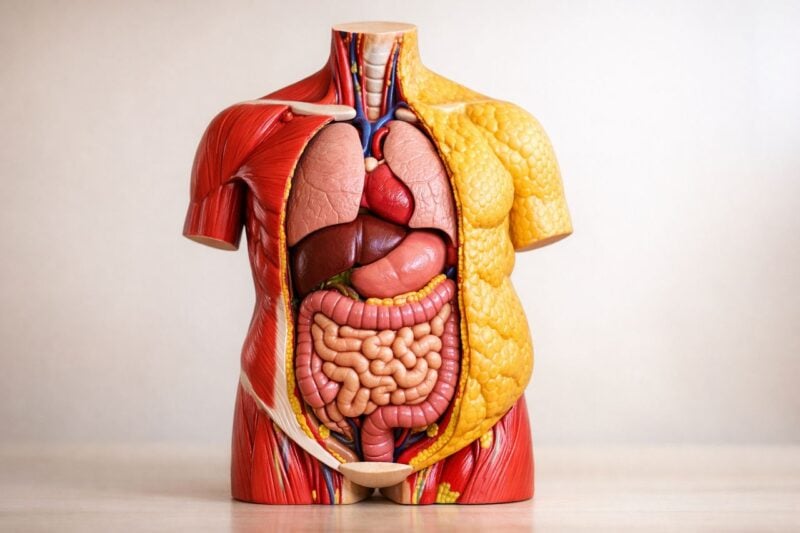
Body fat distribution is another critical aspect that BMI fails to address. Research has shown that where fat is stored in the body can significantly impact health outcomes. For instance, individuals with excess abdominal fat, often referred to as visceral fat, are at a higher risk for metabolic disorders, cardiovascular diseases, and other health issues, regardless of their overall BMI.
Waist circumference and waist-to-hip ratio are alternative measurements that can provide valuable insights into body fat distribution. These metrics help to identify individuals who may be at risk for health complications due to central obesity. For example, a person with a normal BMI but a high waist circumference may still face significant health risks due to the accumulation of visceral fat.
Furthermore, the concept of body composition extends beyond fat versus muscle. Different types of body fat, such as subcutaneous fat (fat stored under the skin) and visceral fat (fat stored around internal organs), have different health implications. While subcutaneous fat is generally considered less harmful, visceral fat is associated with a host of metabolic issues. Therefore, understanding body fat distribution is crucial for a more accurate assessment of health risks.
In conclusion, body fat distribution plays a vital role in health assessment, highlighting the need for more comprehensive evaluations beyond BMI. By considering factors such as waist circumference and the types of body fat, individuals and healthcare providers can gain a clearer understanding of health risks and make more informed decisions regarding lifestyle and intervention strategies.
Alternative Metrics for Evaluating Body Composition
Given the limitations of BMI, several alternative metrics can provide a more accurate assessment of body composition and overall health. One popular method is the use of body fat percentage measurements, which can be obtained through various techniques such as skinfold calipers, bioelectrical impedance analysis, and dual-energy X-ray absorptiometry (DEXA). These methods offer a clearer picture of body composition by distinguishing between fat and lean mass.
Another alternative is the waist-to-height ratio, which has gained attention as a potential predictor of health risks. Research suggests that this metric may be more effective than BMI in identifying individuals at risk for cardiovascular diseases and metabolic disorders. The waist-to-height ratio is calculated by dividing waist circumference by height, and studies have shown that a ratio greater than 0.5 is associated with increased health risks.
Additionally, the use of imaging techniques, such as MRI and CT scans, can provide detailed insights into body composition and fat distribution. While these methods are more expensive and less accessible than traditional BMI calculations, they offer a comprehensive view of an individual's health status, particularly for those who may be misclassified by BMI alone.
Incorporating these alternative metrics into health assessments can lead to more personalized and effective health strategies. By understanding an individual's unique body composition and fat distribution, healthcare providers can tailor recommendations for diet, exercise, and lifestyle changes that are more aligned with their specific health needs.
Conclusion: Rethinking BMI in Personal Health Evaluations
As we have explored, BMI is a useful but limited tool for assessing health. Its simplicity and ease of use make it appealing for public health initiatives, yet it fails to account for critical factors such as muscle mass, fat distribution, and individual variability. As a result, many individuals may find themselves categorized as obese when, in reality, they possess a healthy body composition.
To ensure more accurate health assessments, it is essential to adopt a multifaceted approach that includes alternative metrics such as body fat percentage, waist circumference, and imaging techniques. By recognizing the limitations of BMI and embracing a broader understanding of health, individuals and healthcare providers can make more informed decisions regarding lifestyle and wellness.
Ultimately, rethinking BMI in personal health evaluations can lead to better health outcomes and a more nuanced understanding of what it means to be healthy. It is crucial to prioritize individual health needs and promote a holistic approach to wellness that goes beyond simplistic categorizations.
Read more:
- World Health Organization – BMI Classification – A comprehensive overview of BMI classifications and their implications for health.
- Centers for Disease Control and Prevention – About Adult BMI – An informative resource on how to calculate and interpret BMI.
- National Institutes of Health – Body Fat Distribution – A study discussing the importance of body fat distribution in assessing health risks.
- American Council on Exercise – Body Fat Percentage – An article explaining the significance of body fat percentage and various measurement methods.
- Harvard Health Publishing – Rethinking BMI – A discussion on the limitations of BMI and the need for alternative health assessments.